OSHA reports that improper material storage — including pallets — is one of the most frequently cited warehouse hazards. Proper pallet storage isn't just good practice; it's a safety requirement.
Maximum Stack Height
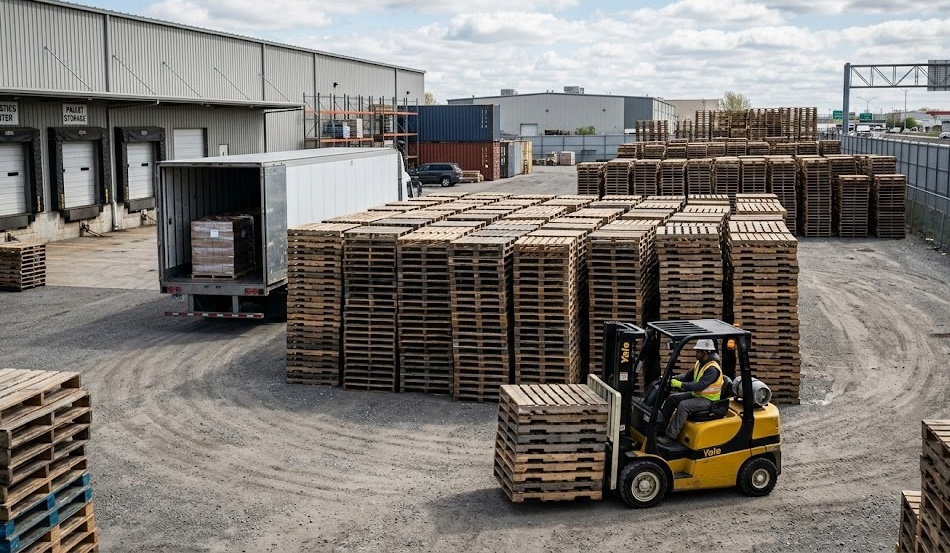
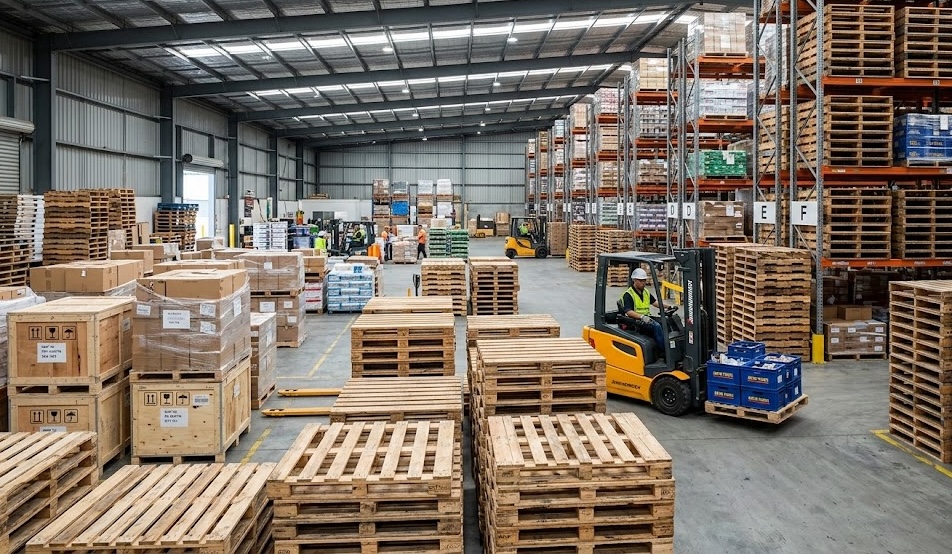
Empty pallets should not be stacked higher than 6 feet when stored on the floor. That's approximately 15 standard pallets. Why? Tall stacks are unstable, and a falling stack of pallets can cause serious injury. If you need to store more, use designated pallet racking.
Stack on Level Ground
Always stack pallets on level, solid surfaces. Uneven ground causes leaning, and a stack that leans more than 2 inches from vertical should be restacked immediately. Outdoor storage areas should be graded and compacted.
Uniform Stacking
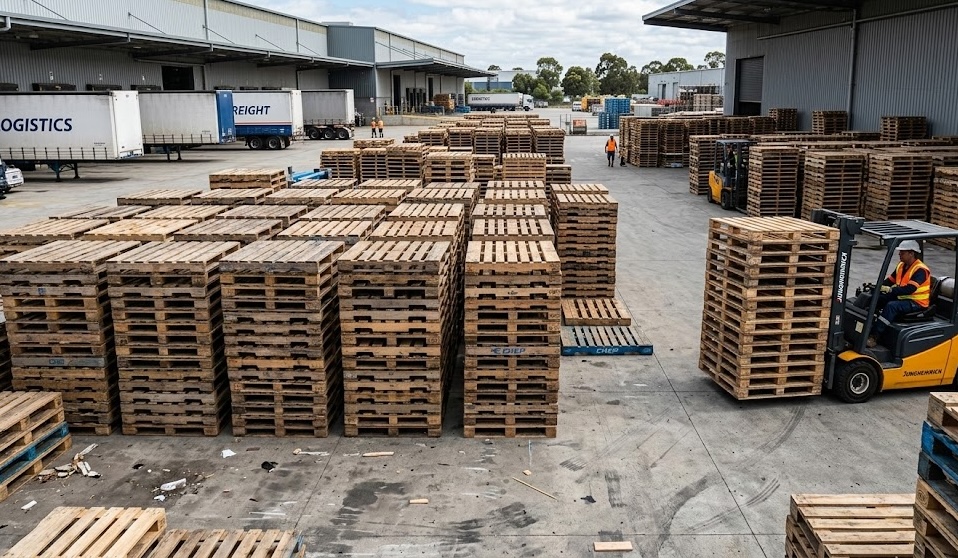
Don't mix pallet sizes in a single stack. A 42×42" pallet stacked on 48×40" pallets creates an unstable overhang. Group pallets by size and stack like with like.
Adequate Spacing
Leave at least 6 inches between pallet stacks for airflow and to prevent cascading collapses. Maintain clear aisles per your local fire code — typically 8 feet for forklift traffic.
Indoor vs. Outdoor
Indoor storage is always preferred. Pallets stored outdoors degrade faster due to UV exposure, moisture, and temperature cycling. If outdoor storage is unavoidable:
- Use tarps or covers to protect from rain and snow
- Elevate the bottom pallet off the ground using concrete blocks
- Rotate stock — use oldest pallets first
- Inspect more frequently for moisture damage and pest activity
Fire Safety
Wooden pallets are combustible. Maintain required clearances from ignition sources, ensure sprinkler systems cover storage areas, and follow NFPA guidelines for wood storage in your facility. Keep fire extinguishers accessible near pallet storage areas.
Training
Every warehouse employee who handles pallets should understand these basics. A 15-minute safety briefing can prevent the kind of incident that shuts down operations for a day. We're happy to share our safety checklist with any customer — just ask.